Video survey market research agency
Video surveys capture people’s reactions in their own words, wherever they are. FieldworkHub recruits carefully screened consumers, business professionals and specialist audiences for online video research in the UK and internationally, helping researchers gather authentic recorded responses to their questions.
20+ video survey projects completed
Video surveys run in 15+ countries
500+ video survey participants recruited

Why video surveys?
Why should you conduct video survey market research?
A video survey asks participants to answer research questions using recorded video rather than relying only on written or multiple-choice responses. This allows researchers to hear participants explain their views in their own words while also capturing tone, expression and context.
Video surveys can combine some of the scale and flexibility of online research with the richness of qualitative feedback. Participants can usually respond in their own time, making the method useful when researchers want detailed reactions from people in different locations or time zones.
Video survey responses are typically one to two minutes long and often take the form of ‘selfie’ videos, with participants speaking directly to their smartphone cameras. Alternatively, participants can use their rear-facing cameras to demonstrate a product, show their surroundings or narrate an activity they are carrying out on their phones.
The method can be used for concept testing, product feedback, customer experience and advertising research, as well as diary-style studies where participants record their experiences over time.
The quality of video research depends on recruiting people who match the study criteria and are comfortable providing thoughtful responses on camera. FieldworkHub manages participant recruitment and screening across consumer, B2B and specialist audiences.
Video survey clients
Selected video survey market research clients
FieldworkHub has arranged video surveys for some of the world’s leading brands...


Types of video survey
What are the different types of video survey?
Video surveys can take several forms, depending on the research objectives and how participants are asked to record their responses. Here are six common approaches.
Self-recorded video surveys
Participants record short video responses to research questions using their smartphones or other devices. Often taking the form of selfie videos, these surveys capture spontaneous reactions and personal opinions in participants’ own words and expressions, while allowing them to respond at a time that suits them.
Live video surveys
Participants provide video responses during a live research session, either remotely or at a central location. Researchers can present questions, products or other stimulus materials and capture immediate reactions, making this approach useful when spontaneous feedback is particularly important.
Diary-style video surveys
Participants record a series of short videos over several days or weeks, documenting their experiences, thoughts and behaviours. Video diaries allow researchers to follow changes over time, identify patterns in participants’ everyday experiences and capture reactions close to the moment when relevant activities or events occur.
Product feedback video surveys
Participants use or evaluate a product or service before recording their reactions on video. They can demonstrate features, highlight difficulties and explain what they like or dislike, providing researchers with detailed feedback on usability, performance and overall satisfaction.
Ethnographic video surveys
Participants record videos of everyday activities or environments, showing how products and services fit into their daily lives. Using their smartphone cameras, they can demonstrate behaviours and routines that might be difficult to describe accurately through conventional survey responses.
Mobile activity video surveys
Participants record their smartphone screens while completing activities such as navigating an app, browsing a website or making an online purchase. They can narrate their actions and reactions as they go, helping researchers understand digital behaviour and identify difficulties in the user experience.
Case studies
Case studies of video survey market research
FieldworkHub recruits participants for video surveys and online video research in the UK, Europe and other international markets. We support consumer, B2B and specialist studies, including asynchronous video responses, diary research and product or concept feedback.
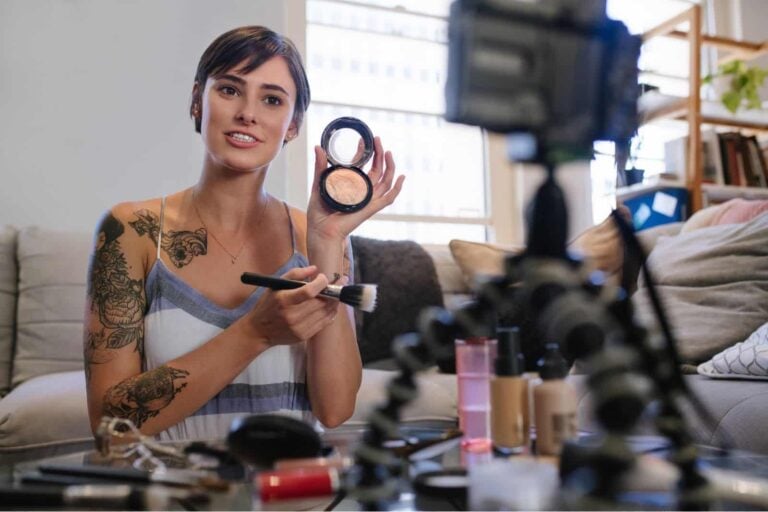
Video surveys, IDIs: short-form video creators, 3 markets
We recruited short-form video creators aged 14-17 years and 18-24 years in India, Spain and South Korea to answer a series of video surveys in a project for a major online video sharing platform. For the older age group, we ensured that all participants had at least 1000 followers on their primary platform.

Video surveys: home fragrance products, UK
A well-known FMCG company was carrying out research on air fresheners and home fragrance products. We recruited purchasers of these products to make a 5-minute smartphone video in their usual supermarket, describing how they select these products and what they noticed about in-store displays.

Video surveys: self-empowered consumers, 5 markets
FieldworkHub source vox pop video clips with 25 consumers aged 22 to 60, who described themselves as empowered. Five respondents were recruited in each of five countries, with each respondent creating a series of videos explaining how and why they now feel empowered.
Client testimonials
Testimonials from video survey clients
Here’s what sone of our previous video survey clients say about us.
The team did a great job, FieldworkHub were organised and provided excellent support and communication throughout.
Mike
COO
Education Technology Company
UK
Overall, we had such a great time with them. All of them showed up early and were very open and interested. They stayed with us for the full 4 hours, covering competitor sites, in-store walk throughs and gave a lot of feedback on product. They were able to articulate the ‘why’ behind most of their feedback which is so helpful when we can’t get this in the office!
Caroline
Customer Insights Manager
Apparel company
UK
Got questions?
Frequently Asked Questions
As consultants in the research space, we’ve got the answers to your questions about video survey research. And if there’s anything left unanswered, drop us an email or give the team a call. We’d be happy to help.
1
How can I conduct effective video survey research?
To deliver effective video survey research, it’s important to define clear objectives and design unambiguous, open-ended questions. If time permits, conduct pilot tests with a few participants to confirm that the questions are clearly understood and responses are in line with expectations, then send the survey out to the rest of the sample. Some video survey platforms are able to perform automatic quality checks (e.g., does the survey-taker’s head remain in the frame?) but you may also need to perform manual checks on the content of the responses.
2
What sectors do you deliver video survey research for?
We deliver video survey research in various industries, including consumer goods, healthcare, technology, retail, finance, automotive, media and entertainment, education, travel and hospitality, public sector, real estate and more.
3
How long does video survey research take to deliver?
Delivering a video survey generally takes about 3-4 weeks. The process includes an initial set-up phase, followed by 1-2 weeks for recruiting participants and conducting the video interviews or surveys. The final 1-2 weeks are dedicated to analysing the collected data and preparing the report. Factors such as the project’s complexity, target audience, and number of participants can influence the overall timeline.
4
Can you recruit participants for video surveys?
Yes. We recruit participants for online video research across consumer, B2B and specialist audiences. Recruitment can be based on demographics, behaviours, product usage, professional role or other detailed study criteria.
All participants are screened against the agreed requirements, including any practical requirements for completing the video tasks.
5
When should you use a video survey?
Video surveys are useful when researchers want richer open-ended feedback than a conventional online survey can provide, but do not need every participant to join a live interview. They can be particularly effective for reactions, demonstrations and diary-style research.
The format also works well for geographically dispersed participants who can complete the research at a convenient time.
Planning a video research project?
Talk to our fieldwork specialists about participant recruitment for video surveys, video diaries and other online video research in the UK and international markets.