

User experience market research agency
Good UX research starts with understanding how real people use digital products. FieldworkHub recruits carefully screened consumers, business professionals and specialist users for usability testing and UX studies in the UK and internationally, matching participants to each project’s audience and research requirements.
200+ UX testing projects completed
UX testing runs in 20+ countries
2500+ UX testing participants recruited

Why UX testing?
Why should you conduct user experience testing?
UX testing explores how people interact with websites, apps, digital products and services so research teams can identify where the experience works well and where users encounter friction. Participants are typically asked to complete realistic tasks while researchers observe their behaviour and gather feedback.
The method can reveal problems that are difficult to identify through analytics or stakeholder review alone. Researchers can see where users hesitate, misunderstand instructions, abandon tasks or take unexpected routes through a product or service.
UX research can be conducted remotely or in person and may involve moderated or unmoderated sessions. It is useful at different stages of development, from early concepts and prototypes to live products that need refinement.
The quality of UX testing depends on recruiting participants who genuinely represent the intended users. FieldworkHub manages participant recruitment against detailed criteria, helping clients reach relevant consumer, B2B and specialist audiences for usability and user experience research.
UX testing clients
Selected UX testing market research clients
FieldworkHub has arranged UX research for some of the world’s leading brands...



Types of UX research
What are the different types of UX research?
Below we describe some of the common ways of undertaking UX testing research.
Moderated usability testing
A researcher observes participants as they complete tasks on a website, app or digital product, asking questions and exploring their reactions along the way. This approach helps uncover usability problems and understand why users encounter difficulties with particular features or tasks.
Unmoderated usability testing
Participants complete predefined tasks independently, usually through a specialist research platform. Their actions and feedback are recorded for later analysis, making this approach useful for testing with larger or geographically dispersed groups of users.
Prototype testing
Participants interact with early versions of a website, app or product to assess its usability before development is complete. Prototype testing helps researchers identify confusing features, evaluate design concepts and make improvements before launch.
User interviews
One-to-one interviews explore users’ needs, experiences and expectations of a digital product or service. Researchers can investigate specific difficulties, understand motivations and gather detailed feedback to inform design and development decisions.
Accessibility testing
Participants with different disabilities or accessibility needs test websites, apps or digital products to identify barriers to effective use. Research may involve assistive technologies, such as screen readers, and helps organisations create more inclusive experiences.
Eye-tracking research
Specialist technology records where participants look when using a website, app or digital interface. This helps researchers understand visual attention, identify elements that attract or distract users and assess how effectively information is presented to, and understood by, the target audience.
Case studies
Case studies of UX research
FieldworkHub recruits participants for UX research and usability testing in the UK, Europe and other international markets. We support consumer, B2B and specialist studies, including projects involving niche users, senior professionals and clearly defined target audiences.
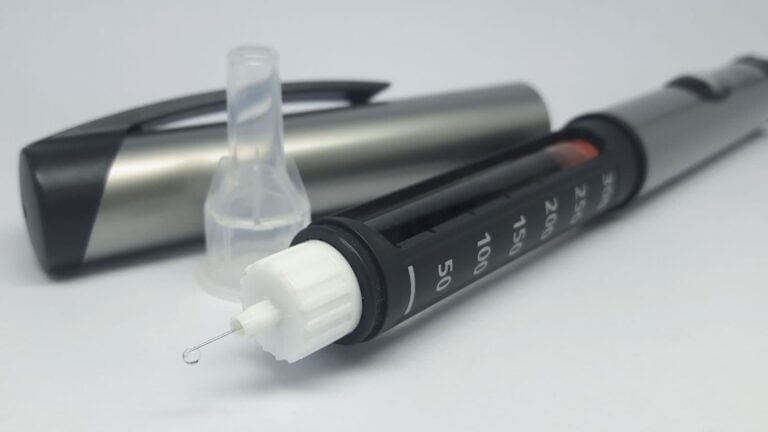
User experience, TDIs: type 1 diabetes, UK, Germany
A not-for-profit organisation, wanted to test an app to assist management of Type 1 diabetes with recently diagnosed patients and those managing the condition. We recruited 20 patients diagnosed in the last 12 months and 30 patients diagnosed more than 12 months ago to test the app and take part in TDIs.

User experience: B2B website navigation, 4 markets
A popular multinational online store and marketplace and wanted to improve the user experience of their payment services platform. They asked us to recruit online merchants in the UK, China, Germany and Poland to take part in online IDIs in which they demonstrated how they use other platforms.

User experience: VR headsets, UK, France, Germany
We were asked to recruit ten respondents in the UK and 30 in each of France and Germany to provide feedback on VR headsets made by a leading brand. The manufacturer wanted their views on both the products themselves and the way in which they were promoted through point-of-sale displays.

User testing: hospital and home infusion pumps, UK
A healthcare company had created a new infusion pump for blood transfusions in hospitals and home care settings. The company wanted to test out the user experience with key worker nurses and caregivers. FieldworkHub provided recruitment of around 40 professionally registered nurses and carers.

User testing: online business travel visa platform, UK
A digital innovation agency developed a new platform to simplify the process of applying for business travel visas and wanted to test out user experience. FieldworkHub recruited UK passport holders applying for a business visa in the next two weeks and arranged for them to submit their application through the platform.

User testing: wearable health device for seniors
Our client wanted to gain insights from healthcare practitioners and older consumers about a new wearable device for vital sign measurement which is intended for home use. We were asked to recruit respondents in New York City for face-to-face sessions to conduct usability testing.
Client testimonials
Testimonials from UX clients
Here’s what some of our previous clients for user experience research say about us.
We used FieldworkHub recently and now they’re our recruiter of choice. The briefing process is very simple and they’re very easy to deal with. Best of all is the ease and transparency of being able to check the recruits and their profiles so you have a good insight into each person.
James
Managing Director
Silk Road Marketing
UK
FieldworkHub made our participant recruitment process effortless. They supported us from start to finish, offering expert guidance, clear communication and detailed updates at every stage. Their professionalism and attention to detail ensured we had the right participants for our one-to-one interviews and survey. We wouldn’t hesitate to work with them again.
Melissa
Marketing Company
UK
Got questions?
Frequently Asked Questions
As consultants in the research space, we’ve got the answers to your questions about UX research and usability testing. And if there’s anything left unanswered, drop us an email or give the team a call. We’d be happy to help.
1
What is the difference between qualitative and quantitative UX research?
Qualitative UX research explores in detail the behaviour of a small number of participants through methods like interviews and observations. Quantitative UX research is designed to generate numerical data, and often involves A/B testing of different versions of an app or website (or testing of a client app/website against those belonging to competitors), to determine which version performs better.
2
How does UX testing impact product design?
UX research informs design decisions by providing insights into user needs and behaviours. It helps create user-centred designs that improve usability, satisfaction and overall product success.
3
How do you present UX research findings?
Findings are presented through detailed reports, user personas, journey maps, and presentations. These materials highlight key insights, recommendations and actionable steps to improve the user experience.
4
What are personas used in UX research?
Personas are fictional characters representing different user types based on research data. They help designers understand the goals, behaviours and needs of different user segments, guiding design decisions to help ensure that the requirements of key market segments are satisfied.
5
Can you recruit participants for UX and usability testing?
Yes. We recruit participants for UX research, usability studies and product testing across consumer, B2B and specialist audiences. Recruitment can be based on demographics, behaviours, product usage, professional role, technical experience or other detailed study criteria.
All participants are screened against the agreed requirements to help ensure they genuinely match the intended user profile.
6
Can you recruit B2B participants for UX research?
Yes. We regularly recruit business professionals for UX and usability studies, including participants defined by sector, company size, job role, seniority, purchasing responsibility or use of particular systems and software.
We can support online and in-person research in the UK and international markets, including harder-to-reach professional audiences.
Planning a UX research or usability testing project?
Talk to our fieldwork specialists about participant recruitment for moderated, unmoderated or product-based UX research in the UK and international markets.