
Focus groups in UK
Focus groups allow participants to combine experiences and perspectives to explore ideas in depth. Commonly used during creative and conceptual development, they help you understand your customers’ needs, perceptions, and beliefs.



The United Kingdom of Great Britain consists of England, Wales, Scotland and Northern Ireland. The UK has the second-largest economy and the second-largest population in Western Europe and is the second-largest research market in the world (after the USA).
As a result of the British empire, British culture remains globally influential, and English is the most widely spoken foreign language globally with over 1.5 billion speakers. English is considered the global language of business and travel. The Royal Greenwich Observatory in London is also the defining point for the Prime Meridian, used to calculate modern time zones. The capital city of London is among the world’s leading financial and cultural centres.
The UK’s economy is heavily dominated by services, contributing 73% towards the nation’s GDP. Major areas of growth include human health (such as pharmaceutical companies like GSK and AstraZeneca) and finance and insurance (Prudential, Aviva, Barclays and Lloyds are all huge players).
For companies based in the USA and other English-speaking countries, the UK is a natural starting point for a European market research programme. FieldworkHub’s home city of London is by far the largest centre for face-to-face market research but we also run focus groups and other types of research in Birmingham, Liverpool, Sheffield, Bristol, Manchester and Newcastle, Edinburgh, Cardiff and Belfast.
Greenwich Mean Time UTC +0
Daylight Saving Time operates from the last weekend in March to the last weekend in October

Focus groups allow participants to combine experiences and perspectives to explore ideas in depth. Commonly used during creative and conceptual development, they help you understand your customers’ needs, perceptions, and beliefs.

In-depth interviews (IDIs), where a moderator interviews a single respondent, can be conducted face-to-face, online, or over the phone. They are ideal for B2B research and for exploring delicate subjects with consumers and hard-to-reach groups.

Ethnographic research is a qualitative research method in which the researchers observe participants using a product or service, or carrying out other activities, in their own environment, typically at work or at home.

An online bulletin board (OBB) is an online forum for qualitative market research that enables participants to log in to carry out research tasks or reply to questions asked by a moderator at their own pace, typically over a period of a few days.

A market research online community (MROC) is similar to an online bulletin board (OBB). However, unlike an OBB, an online community may be used to serve multiple purposes, and the community may remain active for weeks, months or even years.

User experience (UX) testing is a qualitative research methodology which involves directly observing and interviewing a participant using a product or service. It is widely used for testing new versions of apps and websites before they are launched.

Customer experience (CX) testing evaluates how customers interact with a product, service, or digital platform. It helps identify usability issues and overall satisfaction to improve the customer journey and ensure a smooth and enjoyable experience.

A video survey is a type of unmoderated qualitative research in which survey takers respond to a series of instructions or questions by making short videos using their smartphone, either in ‘selfie’ mode or to record an activity.

Vox pop research involves making recordings of people, usually members of the public, responding to questions. These clips are often used in research to illustrate public opinion on widely known topics, brands, or products.

Online surveys are a cost-effective research method with great flexibility in design. Automated data handling allows the results to be available quickly and many online surveys can be completed on smartphones, helping to improve the response rate.

CATI (computer-assisted telephone interviewing) leverages technology to reach those who aren’t online. CATI interviews follow an electronic script with built in routing and type in the respondent’s answers to each question as the interview proceeds.

CAPI (computer-assisted personal interviewing) is a form of face-to-face interviewing where the interviewer reads the survey questions from a tablet device and inputs the respondent’s answers directly to the device.

We recruited 13 IT security decision makers who worked for large companies to take part in a three-day OBB about external threat intelligence and digital risk protection solutions. Six of the participants were then invited to take part in triad interviews to explore some of the issues in more detail.

FieldworkHub arranged IDIs with individuals who have experienced harassment while travelling on trains in the UK. We recruited BAME, women, LGBTQ+ and people with disabilities, allowing them to share valuable insight into their experiences of travelling by train.
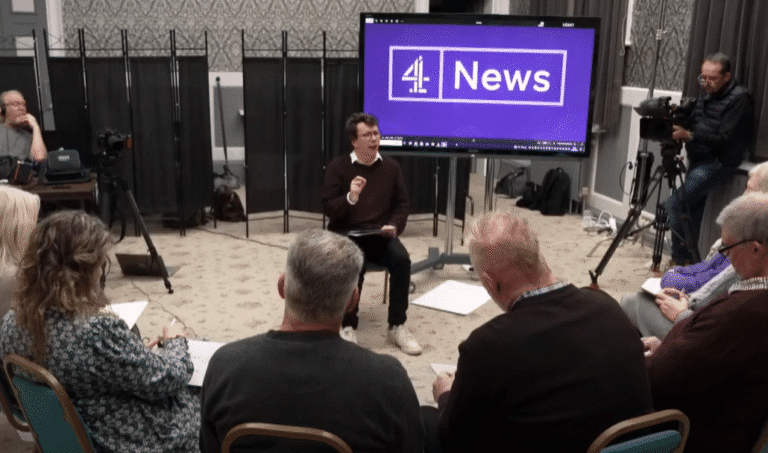
FieldworkHub recruited participants for two 90-minute in-person focus groups with voters in Grimsby, North Lincolnshire for a segment on Channel 4 News which was broadcast in March 2025. The first group consisted of older voters and the second group comprised lapsed voters of different ages.

Our client was working with a manufacturer of specialist nutrition products to help them develop marketing messages for dieticians and payers/commissioners working in oncology. We arranged an online focus group with oncology dieticians and a second group with payers/commissioners working in the National Health Service.

FieldworkHub organised IDIs with surgeons and hospital administrators from UK hospitals. We recruited a mix of individuals working in hospitals that currently use software applications and robotic products in their operating theatres, and those who don’t currently, but are interested in using them in the near future.

Our client, a UK-based communications agency that helps employers to attract and engage talent wanted to speak to business and strategy analysts to assist them in creating job descriptions for a financial services company. We were asked to recruit business and strategy analysts with varying levels of experience.