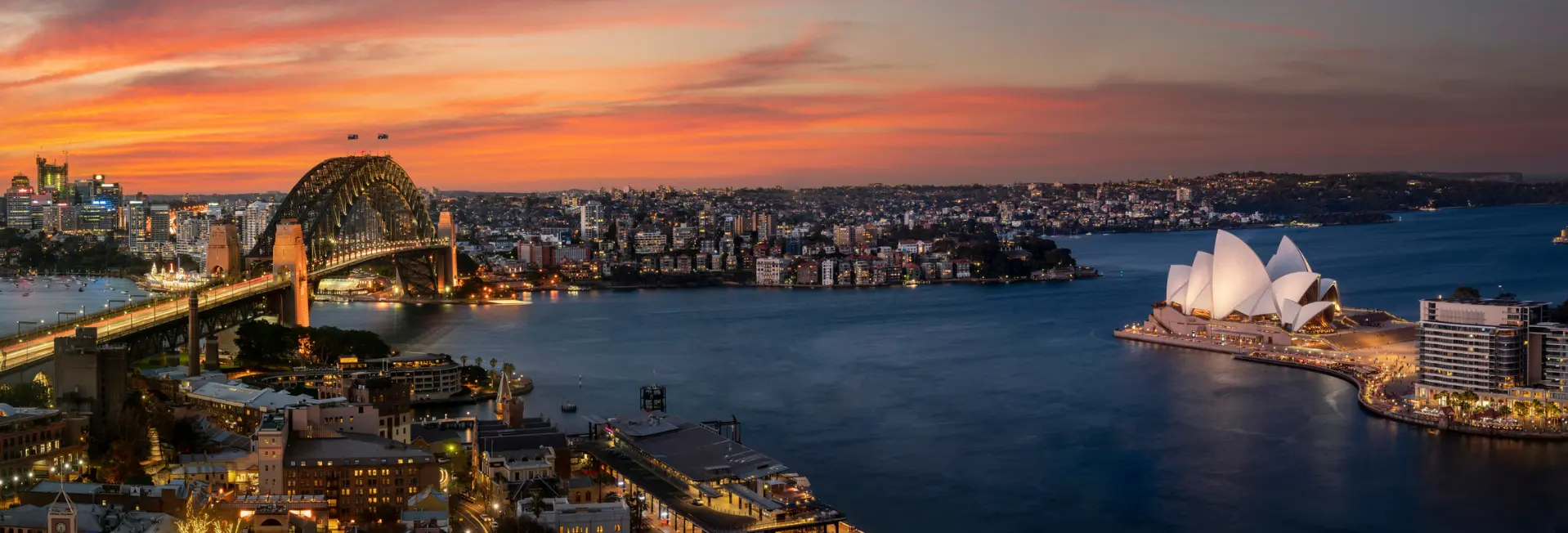
Australia is the sixth largest country in the world by total area, but only ranks around 54th in terms of its population. The population is highly urbanised, with the majority living in major cities such as Sydney, Melbourne, Brisbane, Perth and Adelaide. As the cities with the largest populations, Sydney and Melbourne are the main centres for face-to-face market research.
About 30% of Australia’s population was born outside the country. The countries contributing the most to this total are the UK, India, China, the Philippines, New Zealand and Vietnam.
Australia was granted partial independence from the UK in 1901 and full independence in 1942, although the British monarch is still the head of state. The country has a federal democratic system of government with two main political parties and compulsory voting. The federal government is based in Canberra in the Australian Capital Territory, an area ceded by New South Wales for the new capital in 1911.
Australia has a troubled history with the indigenous Australians, including Aboriginal and Torres Strait Islander peoples, who represent about 3.2% of the population. In recent years there have been various moves towards reconciliation between the indigenous and non-indigenous populations, but major differences remain in areas such as health, education and economic prospects.
Australia has an advanced mixed economy dominated by services but much of its recent growth can be attributed to the extraction and export of minerals. Commodities make up two-thirds of the value of Australia’s exports so the economy tends to do well when commodity prices are high and badly when they are low.